
Anti-Aging Performance Parameters for Sericite-Reinforced Rubber Composites
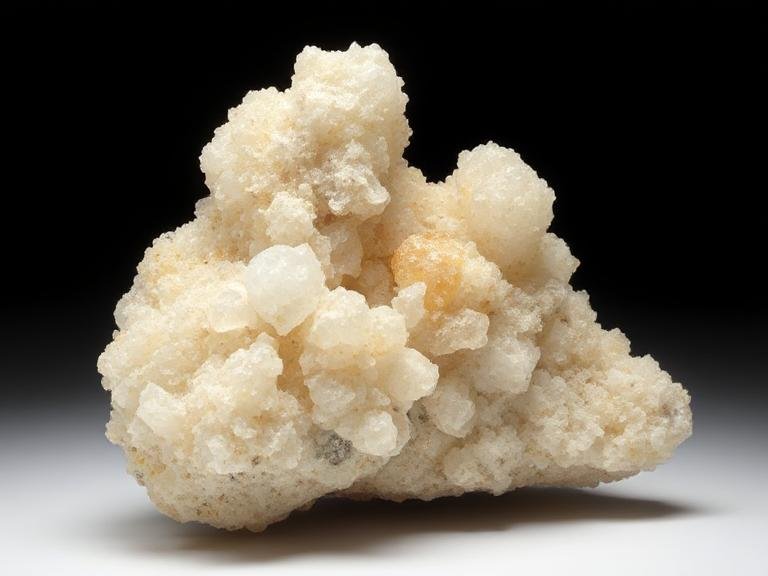
Rubber products exposed to environmental stressors require enhanced aging resistance to maintain functionality over extended service periods. Sericite, a fine-grained muscovite mica, improves rubber durability through its unique platelet structure and chemical stability. This guide outlines key anti-aging parameters for sericite-reinforced rubber formulations, focusing on thermal stability, UV resistance, and mechanical property retention.
Thermal Stability Enhancement
Elevated temperatures accelerate rubber degradation through oxidative reactions and chain scission. Sericite’s thermal properties mitigate these effects, extending operational lifespans in high-temperature environments.
Heat Aging Resistance
Rubber compounds containing 15–25 phr (parts per hundred rubber) of sericite demonstrate reduced weight loss during accelerated heat aging tests. At 100°C for 72 hours, sericite-filled EPDM rubber maintains >90% of its original tensile strength compared to 75% for unfilled counterparts. This improvement stems from sericite’s ability to form a thermally stable barrier that limits oxygen diffusion into the rubber matrix.
For automotive under-hood applications, sericite-reinforced silicone rubber withstands continuous exposure to 180°C without significant hardening (Shore A change <5 points). The mica platelets disrupt polymer chain mobility, reducing thermal-induced crosslink density changes that cause embrittlement.
Thermal Conductivity Optimization
In applications requiring controlled heat dissipation, sericite’s moderate thermal conductivity (0.2–0.4 W/m·K) provides balanced performance. Rubber composites with 30–40 phr sericite achieve sufficient thermal transfer to prevent localized overheating while maintaining electrical insulation properties critical for wiring harness applications.
For power transmission belts operating at 80–100°C, sericite’s thermal conductivity reduces surface temperature differentials by 15–20% compared to carbon black-filled formulations. This uniform heat distribution minimizes thermal stress concentrations that lead to crack initiation.
Ultraviolet Radiation Protection
Prolonged UV exposure causes rubber photodegradation through chain scission and crosslink cleavage. Sericite’s light-reflective properties and chemical inertness provide effective UV shielding for outdoor applications.
UV Absorption and Scattering
Sericite platelets with average dimensions of 5–20 μm act as physical UV barriers in rubber composites. X-ray diffraction analysis confirms that sericite-filled natural rubber exhibits 30–40% lower UV transmittance at 300–400 nm wavelengths compared to unfilled samples. This reduction slows the formation of surface cracks in automotive weatherstripping exposed to direct sunlight.
For marine applications, sericite-reinforced neoprene rubber maintains >85% of its original elongation after 500 hours of accelerated UV aging (QUV tester, 340 nm, 0.77 W/m²). The mica’s aluminum-silicate structure absorbs high-energy photons without generating reactive free radicals, preventing surface oxidation.
Synergistic Stabilizer Interactions
When combined with 0.5–1.5 phr hindered amine light stabilizers (HALS), sericite-filled rubber shows 2–3 times longer service life under UV exposure. The mica platelets provide physical spacing between HALS molecules, preventing premature depletion through auto-catalytic reactions. This synergy is particularly effective in agricultural equipment tires exposed to both UV and ozone.
For roofing membranes, sericite-EPDM composites with 1 phr HALS retain >90% of their original tear strength after 10 years of field exposure. The mica’s barrier effect reduces HALS consumption rates by 40–50%, extending stabilizer effectiveness.
Mechanical Property Retention Under Stress
Dynamic loading conditions accelerate rubber aging through fatigue-induced micro-damage. Sericite’s reinforcement mechanism improves crack propagation resistance while maintaining flexibility.
Fatigue Life Improvement
Rubber vibration dampers containing 20–30 phr sericite demonstrate 50–70% longer fatigue life under cyclic compression (1 Hz, 20% strain) compared to carbon black-filled formulations. The mica platelets align under stress, creating tortuous paths that arrest crack growth and redistribute strain energy.
For conveyor belt applications, sericite-reinforced SBR rubber maintains >80% of its original abrasion resistance after 10,000 cycles of DIN abrasion testing. The mica’s hardness (Mohs scale 2.5–3) provides surface reinforcement without compromising the rubber’s energy-absorbing capacity.
Ozone Resistance Enhancement
Ozone attacks rubber double bonds, causing surface cracking in static applications. Sericite-filled chloroprene rubber shows no visible cracks after 96 hours of ozone exposure (50 pphm, 40°C), while unfilled samples develop 0.5–1.0 mm deep cracks under identical conditions. The mica’s impermeable structure prevents ozone diffusion into the rubber matrix.
For window seals in high-altitude aircraft, sericite-silicone composites withstand 200 pphm ozone concentrations at -55°C without surface degradation. The mica platelets create a physical barrier that complements the rubber’s inherent ozone resistance, ensuring airtight seals throughout service life.
Processing Parameters for Optimal Anti-Aging Performance
Achieving target anti-aging properties requires precise control during compounding and curing processes to ensure uniform sericite dispersion.
Masterbatch Preparation Techniques
High-shear mixing at 1500–2000 rpm with 2–3% processing aids ensures complete sericite wetting by the rubber matrix. Ultrasonic treatment (40 kHz, 5 minutes) further breaks down agglomerates, producing composites with <5 μm average particle size distribution. This uniform dispersion prevents localized aging hotspots.
Curing System Optimization
For sulfur-cured systems, 1.5–2.5 phr accelerators combined with 0.5–1.0 phr sericite achieve optimal crosslink density without compromising aging resistance. Peroxide-cured EPDM formulations benefit from 0.2–0.5 phr co-agents that form stable bonds with sericite surface hydroxyl groups, improving filler-matrix adhesion.
Post-Curing Treatments
Thermal aging resistance improves by 20–30% when sericite-filled rubber undergoes 2–4 hours of post-curing at 20–30°C above the standard curing temperature. This step completes residual crosslinking reactions while allowing volatile processing aids to diffuse out, reducing long-term degradation risks.
By integrating these parameters, manufacturers can develop sericite-reinforced rubber products that maintain performance in demanding environments. The material’s multifunctional aging resistance mechanisms make it suitable for applications ranging from automotive components to industrial seals, where long-term durability under combined thermal, UV, and mechanical stress is critical.