
Welding Mica Plates Without Heat Damage: The Precautions That Actually Save Your Material
Mica plates are tough customers. They handle over 1200 degrees Celsius in tubular insulation form and resist electrical breakdown like champions. But during welding, that same mica can crack, delaminate, or lose its insulating properties if you push the heat too hard or hold it too long. The difference between a perfect weld and a ruined plate often comes down to a few seconds of temperature control and the right fixtures in place.
Why Mica Plates Fail During Welding
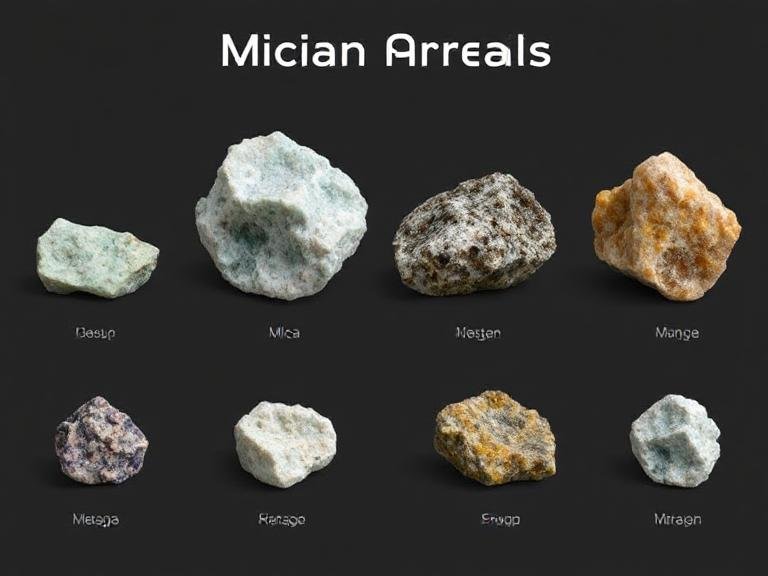
The core problem is simple: mica is a phyllosilicate with a layered crystal structure. Muscovite mica tops out around 550 degrees Celsius, while phlogopite can push to 900 degrees Celsius. Beyond those thresholds, the layers start separating, moisture trapped between sheets expands, and the whole plate warps or cracks. Even below the maximum rating, rapid temperature spikes cause micro-fractures that weaken the material over time.
Heat guns alone can emit over 500 degrees Celsius, and mica is often the insulation wrapping those elements. When you weld near or on mica plates, that concentrated heat transfers fast — especially along the plane of the sheet, where thermal conductivity hits 3.0 W/mK compared to just 0.3 W/mK perpendicular to the surface. Heat races sideways through the material faster than you might expect.
Temperature Control: The Single Most Critical Factor
Stay Inside the Rated Window
Never exceed the mica plate’s rated working temperature during any welding operation. For muscovite-based plates, that ceiling sits around 550 degrees Celsius. For phlogopite, you have more headroom up to 900 degrees Celsius, but even that margin disappears fast if your welding iron sits at 350 to 400 degrees Celsius and you hold contact for more than a couple of seconds.
Use temperature-controlled welding equipment with real-time monitoring. A thermocouple placed directly on the mica surface gives you honest data — not the setpoint on your machine, which can lie by 20 to 30 degrees. If the reading climbs above 80 percent of the mica’s rated limit, pull back immediately.
Shorten Exposure Time Dramatically
Time and temperature are equally destructive. A mica plate can survive 600 degrees Celsius for half a second without damage, but hold it there for five seconds and delamination begins. Fast heating combined with fast cooling is the name of the game. Pre-heat the joint area quickly, make the weld, then let the plate cool on a heat sink or with forced air. Do not let it sit in ambient heat after welding.
Reflow soldering works well here if you use a proper temperature curve — ramp up fast, peak brief, cool down fast. Wave soldering is riskier because the entire plate sits in a heat bath. If you must use wave soldering, shield the mica with a thermal barrier and limit dwell time to under three seconds.
Fixtures and Tools That Protect Mica During Welding
Thermal Protection Clamps Are Non-Negotiable
Do not weld a mica plate held by bare tweezers or unshielded clips. Metal tools conduct heat straight into the mica. Use dedicated thermal protection clamps — ceramic or heat-resistant composite jaws that physically isolate the plate from the heat source. Some fixtures even include built-in heating elements that warm the clamp body gradually, preventing thermal shock to the mica edges.
For mica capacitors specifically, the leads are the weak point. A three-axis clamping system (X/Y/Z) keeps leads perfectly vertical and prevents the soldering iron from slipping onto the mica body. Manual tweezer work is inconsistent — one operator might hold for two seconds, another for eight, and the results show up as cracked plates or cold joints weeks later.
Choose the Right Solder and Flux
Low-melting solder makes a massive difference. Tin-bismuth (Sn-Bi) alloys melt around 150 degrees Celsius, roughly 70 degrees lower than standard SAC305 solder. That temperature gap alone can be the difference between a clean joint and a warped mica plate. For extremely heat-sensitive assemblies, laser welding delivers pinpoint energy with almost zero thermal spread to surrounding material.
Avoid corrosive fluxes. They eat into mica surfaces over time and degrade insulation resistance, which should stay above 10 to the 16th ohm-cm at 20 degrees Celsius according to IEC 60093 standards. Use no-clean or mild rosin fluxes instead, and wipe residue off immediately after welding.
Worker Safety Around High-Temperature Mica Welding
Gear Up Properly
Welding near mica plates that are already hot from prior operations means you are working in a double-heat environment. Wear flame-resistant jackets rated at least ATPV 8, welding gloves rated for 3mm thickness minimum, and side-shield welding helmets with auto-darkening lenses that react in under 1/20,000 of a second. A 15-degree angled fire barrier between you and the workpiece cuts splash exposure by over 80 percent.
Hydration and Acclimatization Matter More Than People Think
When you are welding in hot conditions — and mica work often happens near furnaces, heat guns, or underfloor heating elements — your body loses electrolytes fast. Dehydration leads to heat exhaustion and heat stroke within minutes. Drink electrolyte-rich fluids every 15 to 20 minutes, not just water. If you are new to the environment, give yourself one to two weeks to acclimatize before pushing yourself to full speed. Your body needs that time to reach a stable equilibrium between heat production and heat loss.
Post-Weld Inspection: Catch Damage Before It Spreads
After every welding session on mica plates, inspect under magnification. Look for hairline cracks along the edges, discoloration spots, or any sign of layer separation. A simple bend test — flex the plate gently on a padded surface — reveals micro-fractures that the naked eye misses. Mica that has been overheated will feel softer and may show slight warping.
For mica used in high-voltage applications, test volume resistivity after welding. It should remain above 10 to the 12th ohm-cm even at 400 degrees Celsius. If resistance drops, moisture or thermal damage has compromised the insulation, and that plate needs to be pulled from service.
Store welded mica plates in cool, dry conditions away from direct sunlight. Temperature fluctuations cause condensation on cool mica surfaces, and that moisture sits between the layers, accelerating delamination. Keep plates on foam or cardboard separators, never stacked directly on top of each other, and always in an environment below 60 percent relative humidity.