
Mica Sheet Thermal Insulation in Kiln Equipment: Why It Outperforms Every Other Option
When temperatures inside industrial kilns climb past 800°C, most insulation materials start to soften, degrade, or worse — catch fire. Mica sheets don’t flinch. That’s why furnace engineers across metallurgy, ceramics, and petrochemical sectors have relied on this layered silicate mineral for decades. It’s not hype — it’s physics.
What Makes Mica Uniquely Suited for Kiln Insulation
Mica belongs to the sheet silicate mineral family, meaning its crystal structure naturally stacks into thin, flexible layers. This architecture gives it a rare combination: extraordinary heat resistance paired with mechanical pliability that rigid ceramics simply cannot match.
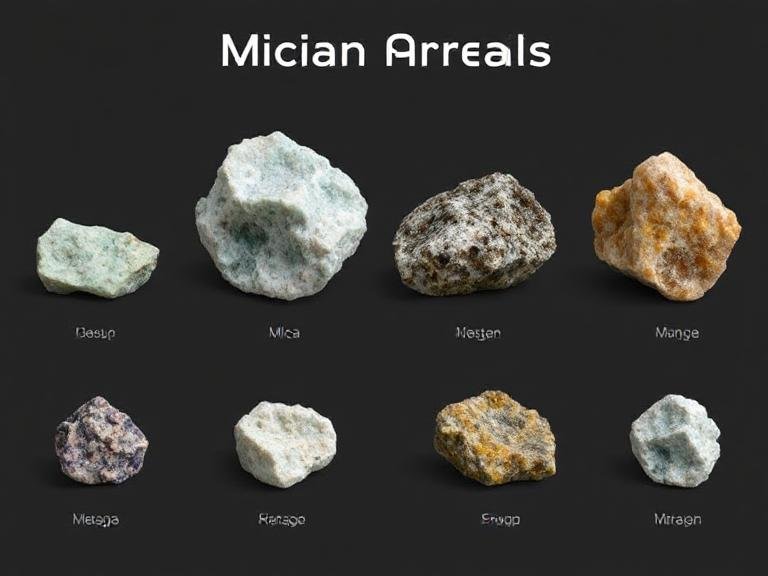
White mica (muscovite) handles continuous exposure up to 500–700°C. Gold mica (phlogopite) pushes that ceiling to 850°C continuously and survives intermittent spikes beyond 1000°C. Some synthetic fluorophlogopite variants even exceed 1200°C without decomposition. Compare that to standard fiberglass laminates like FR-4 or G10, which top out around 19–24 kV/mm dielectric strength and start breaking down well below mica’s thermal limits.
The dielectric strength of natural mica reaches 20–25 kV/mm — roughly five to ten times higher than conventional glass-fiber boards. In a kiln environment where electrical heating elements sit dangerously close to metal housings, that margin isn’t luxury. It’s the difference between a controlled process and a catastrophic short circuit.
Thermal conductivity sits at just 0.71 W/mK in the baseline direction, with perpendicular conductivity dropping even further to 0.44–0.46 W/mK depending on the mica type. Ceramic paper, by contrast, conducts heat more than three times faster. So mica doesn’t just resist heat — it actively slows thermal transfer, protecting structural components and reducing energy waste across every heating cycle.
How Mica Sheets Perform Inside Real Kiln Systems
In metallurgical furnaces, mica sheets line the interior walls between the heating zone and the steel shell. Their layered structure absorbs thermal expansion without cracking — a critical advantage because rigid insulation tiles shatter under repeated thermal cycling. Workers can bend mica around irregular crucible shapes, wrap it around heating elements, and press it into tight cavities where no pre-molded block would fit.
Electric arc furnaces present an even harsher challenge. Here, mica must withstand not only extreme heat but also electric arc erosion. Mica’s resistance to corona discharge and tracking means it maintains dielectric integrity far longer than polymeric alternatives. Studies show that in high-voltage motor and furnace windings, mica-based insulation drastically reduces partial discharge activity — the silent killer that eats away at equipment from the inside.
In ceramic kilns, mica boards serve a dual role. They insulate the firing chamber while also acting as structural supports inside the kiln furniture. When bonded with high-temperature adhesives and shaped into grates or shelves, mica boards carry the weight of ceramic ware during bisque and glaze firings without warping. After thousands of cycles, they retain their shape — something no organic binder or foam insulation can claim.
Microwave-assisted kilns add another dimension. Mica windows in these systems must let microwave energy pass into the chamber while blocking smoke and particulates from reaching the magnetron. Natural mica’s transparency to microwave radiation combined with its thermal stability makes it irreplaceable here — it protects the emission source while enduring the internal heat load.
Chemical and Mechanical Durability That Extends Service Life
Kilns aren’t just hot — they’re corrosive. Sulfur compounds, alkali vapors, and acidic off-gases attack most insulation materials within months. Mica’s chemical inertness means it resists acids, oils, and strong alkalis without degradation. Laboratory tests show mica absorbs less than 1% moisture after 14 days in humid air, and it shows zero blistering or rust formation. In a chloride-rich atmosphere near salt-bath furnaces, that resistance translates directly into fewer shutdowns for replacement.
Mechanically, mica is deceptively tough. Tensile strength reaches approximately 1757 kg/cm² — significantly higher than Nomex (1195 kg/cm²) or most polymer films. Yet it remains flexible enough to conform to curved surfaces without delaminating. This combination of strength and pliability is why maintenance crews prefer mica gaskets and seals in kiln doors: they compress, recover, and seal reliably cycle after cycle.
The environmental angle matters too. Although mica sheets carry a higher upfront cost than mineral wool or ceramic fiber blankets, their service life runs dramatically longer. Less frequent replacement means less waste, less downtime, and lower total cost of ownership. For facilities tracking carbon footprints, that durability is a genuine sustainability advantage.
Choosing the Right Mica Grade for Your Kiln
Not all mica is created equal — and picking the wrong grade inside a 1000°C furnace is an expensive mistake.
For continuous operation below 500°C, HP-5 white mica board (silvery appearance) delivers excellent insulation at the lowest cost. Between 500°C and 850°C, HP-8 gold mica board (golden appearance) becomes necessary — its magnesium-rich composition handles the extra thermal load without softening. For intermittent exposure above 1000°C, such as in batch furnaces or kiln door seals, synthetic fluorophlogopite or high-purity gold mica variants are the only safe choice.
Thickness matters as well. Standard sheets range from 0.2 mm to 30 mm, and dielectric strength scales inversely with thickness — thinner sheets resist higher voltages per unit distance. In practice, engineers layer multiple thin sheets with staggered joints to eliminate thermal bridging while maintaining electrical isolation.
Crystallinity deserves attention too. Higher crystallinity means better thermal stability and lower dielectric loss. Modern quality control uses X-ray diffraction and differential scanning calorimetry to verify that each batch meets the structural order required for high-performance kiln service. If your supplier cannot provide crystallinity data, walk away — you’re gambling with your furnace integrity.
The bottom line is simple: when your kiln operates above 500°C, mica isn’t just one option among many. It’s the material that makes everything else possible.