

Mica in Roofing Materials: Why This Mineral Is the Unsung Hero of Fire Resistance
Walk up to any commercial building and look at the roof. You see asphalt shingles, metal panels, clay tiles, maybe some modified bitumen. What you don’t see is the mineral doing the heavy lifting when a fire starts spreading from a nearby structure or an electrical fault ignites the membrane. That mineral is mica — and it has been quietly keeping roofs from turning into matchsticks for over a century.
Roofing manufacturers don’t advertise it. Architects don’t specify it by name. But mica powder, mica flakes, and exfoliated mica sheets show up in nearly every fire-rated roofing assembly on the market. The reason is simple: mica doesn’t burn, doesn’t melt, and doesn’t release toxic fumes when exposed to extreme heat. In an industry obsessed with wind uplift ratings and solar reflectance, fire performance gets buried in the fine print — until it doesn’t.
This article breaks down exactly how mica works inside roofing materials, where it performs best, and what happens when you get the dosage or particle size wrong.
The Science Behind Mica’s Fire Resistance in Roofing
Mica is a phyllosilicate — a sheet mineral with a crystal structure built from stacked layers of silica tetrahedra and alumina octahedra. Those layers are held together by potassium ions, and that bonding arrangement is what makes mica so weirdly resilient under heat.
When a roof surface hits 300°C, most organic binders in asphalt shingles start softening. At 500°C, the asphalt itself begins to pyrolyze, releasing flammable hydrocarbons that feed the fire. Mica doesn’t do any of that. Muscovite mica remains structurally stable up to about 700°C. Phlogopite mica — the magnesium-rich variety common in roofing — pushes that limit to 900°C or higher. At those temperatures, mica isn’t just surviving. It’s actively forming a ceramic-like barrier that insulates the material underneath.
The mechanism is twofold. First, the plate-like particles align parallel to the roof surface during manufacturing, creating a labyrinthine path that slows heat transfer through the material. Second, when the organic matrix around the mica burns away, the mica platelets remain behind as a rigid, insulating skeleton — sometimes called a “char scaffold” in fire science literature. This skeleton maintains structural integrity long enough for firefighters to arrive, which is the whole point of fire-rated roofing.
How Mica Compares to Other Flame Retardants in Roofing
Halogenated flame retardants — brominated and chlorinated compounds — were the industry standard for decades. They work by releasing halogen radicals that interrupt the combustion chain reaction in the gas phase. Effective, yes. But they produce dense black smoke, corrosive hydrogen halide gas, and persistent environmental toxins when they burn. Several jurisdictions have banned or restricted them in construction materials for exactly these reasons.
Mica works in the condensed phase instead. It doesn’t interfere with flame chemistry in the air — it protects the material itself from reaching ignition temperature. No toxic smoke. No corrosive off-gassing. The tradeoff is that you need higher loadings — typically 10–25% by weight — compared to 3–5% for halogenated systems. But the health and environmental profile makes mica the obvious choice for modern roofing specs, especially in schools, hospitals, and high-rise buildings where smoke toxicity kills faster than fire.
Intumescent coatings are another option. They swell when heated, forming a foamed char layer. Mica actually complements intumescent systems beautifully — when blended into the coating, mica platelets reinforce the swollen char and prevent it from cracking or spalling under thermal stress. Roofing labs have found that adding 5–8% mica to intumescent formulations doubles the char strength and extends fire rating by 15–20 minutes in standard furnace tests.
Mica in Specific Roofing Product Types
Asphalt Shingles and Composition Roofing
In fiberglass-based asphalt shingles, mica powder serves double duty. It acts as a fire retardant filler and as a dimensional stabilizer that reduces shingle curling under UV exposure. The platelets reflect infrared radiation back toward the surface, lowering the peak temperature the asphalt reaches on a hot summer day. That thermal buffering effect reduces oxidative aging of the bitumen, which is why mica-containing shingles tend to last 3–5 years longer than mica-free equivalents in accelerated weathering tests.
Manufacturers typically use ground muscovite at 5–12% loading in the mat or coating. The particle size matters — coarser grades (50–150 micrometers) work better in the mat because they don’t interfere with asphalt saturation. Finer grades (under 20 micrometers) go into the surface granule coating where they contribute to the fire rating of the exposed layer.
One issue that plagues shingle producers: mica is abrasive. The silicate platelets wear down mixing blades, screw conveyors, and coating dies faster than calcium carbonate or talc would. Maintenance intervals on mica-handling equipment drop by roughly 40%, which is a hidden cost that doesn’t show up on the material data sheet but eats into margins.
Metal Roofing Coatings and Membranes
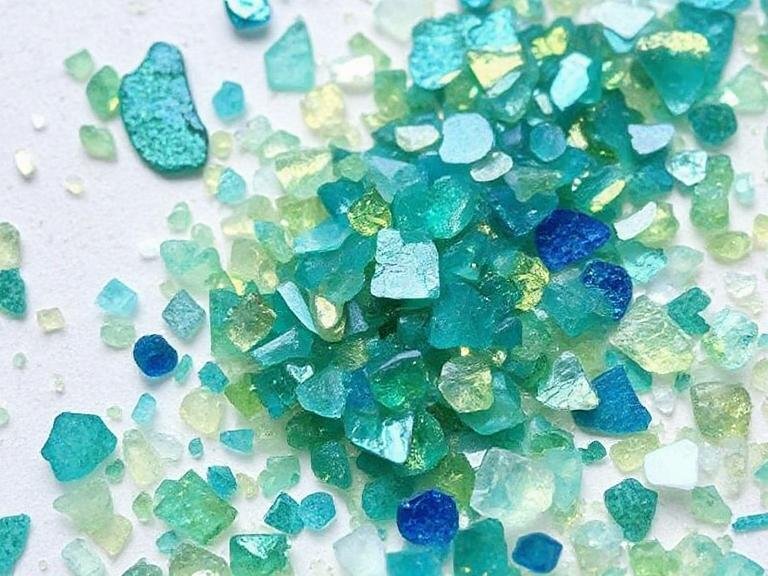
For standing-seam metal roofs and single-ply membrane systems, exfoliated mica — also called mica flake or delaminated mica — is the preferred form. The flakes are larger (0.5–3 mm), thinner (1–10 micrometers per layer), and more optically reflective than ground powder. When dispersed into a coating or embedded in a bitumen-modified membrane, these flakes create overlapping tile-like layers that block radiant heat transfer.
In metal roofing, a topcoat loaded with 15–20% exfoliated mica can reduce roof surface temperature by 30–50°C compared to a standard pigment-only coating. That temperature drop translates directly into lower cooling loads for the building below — a secondary energy saving that roofing specifiers increasingly care about.
For modified bitumen membranes used on low-slope commercial roofs, mica flakes are blended into the asphalt layer at 10–18% by weight. The flakes orient horizontally during rolling, creating a built-in vapor and flame barrier. Fire tests on mica-modified membranes show flame spread indices well below 25 — the threshold for Class A fire rating under most building codes.
Clay and Concrete Roof Tiles
Traditional clay tile manufacturers have used mica for centuries without calling it a fire retardant. They called it a flux — something that helps the tile vitrify during firing. Mica lowers the melting point of the clay body slightly and promotes glassy phase formation, which seals pores and makes the tile denser. Denser tiles absorb less water, freeze less often in winter, and resist fire penetration better than porous alternatives.
In concrete roof tiles, mica powder replaces a portion of the sand aggregate at 5–10% dosage. The platelets reduce shrinkage cracking during curing — concrete tiles crack a lot, and mica’s low water absorption means it doesn’t contribute to drying shrinkage the way sand does. The fire benefit is a bonus: concrete tiles with mica maintain structural integrity at temperatures where plain concrete tiles spall and crumble.
Installation and Long-Term Performance Realities
What Happens to Mica in a Roof Over 20 Years
Mica itself doesn’t degrade. That’s the whole point. But the matrix holding it — asphalt, bitumen, polymer coating — does degrade. UV breaks down binders. Thermal cycling causes expansion and contraction. Water infiltrates micro-cracks and leaches soluble components.
Over 15–25 years, the organic material around mica platelets deteriorates, and the mica gradually becomes exposed at the surface. In shingles, this shows up as a whitish dusting or a slight pearlescent sheen on old roofs. In membranes, the mica flakes become visible as tiny reflective specks. Neither of these is a structural problem — if anything, the exposed mica continues to reflect heat and protect the remaining material.
The real concern is mechanical loss. In shingles, wind and rain physically dislodge mica-containing granules over time. After 20 years, a roof that started with 10% mica loading might effectively have 6–7% — still above the threshold for fire performance, but trending downward. Membrane systems hold mica better because the flakes are embedded in a continuous bitumen layer rather than sitting on the surface as granules.
Moisture and Freeze-Thaw Effects on Mica-Modified Roofing
Water doesn’t attack mica chemically — the silicate structure is essentially inert to pH ranges found in rainwater, even acid rain. But water does get between mica platelets in porous roofing products and freeze. When ice forms between layers, it can pry the platelets apart, creating micro-delamination.
This effect is most noticeable in clay tiles and concrete tiles where mica replaces aggregate. In dense products like metal roofing coatings or bitumen membranes, the matrix is too tight for water to penetrate between flakes, so freeze-thaw damage is negligible.
For shingles, the risk is moderate. Modern shingle designs use adhesive strips and self-sealing granules that limit water ingress to the mat layer. As long as the shingle isn’t mechanically damaged, mica platelets in the mat stay locked in place even after hundreds of freeze-thaw cycles.
Specifying Mica Content for Fire-Rated Roofing Assemblies
Building codes in North America typically reference ASTM E108 or UL 790 for fire classification of roofing. Neither standard mentions mica by name — they test the finished assembly. But the test results correlate directly with mica content. Roofing assemblies that fail Class A without mica almost always pass when mica is added at 12–18% in the bitumen layer or 8–15% in the shingle mat.
European standards are more explicit. EN 13501-5 classifies roofing products by fire performance, and several European tile and membrane manufacturers list mica content on their technical data sheets as part of the fire classification justification. The trend is moving toward transparency — and mica is benefiting from that shift because it’s one of the few fire-retardant strategies that doesn’t come with a toxicity warning label.
When specifying mica for a roofing project, the particle size distribution is critical. A bimodal blend — roughly 70% coarse flakes (100–300 micrometers) and 30% fine powder (under 20 micrometers) — gives the best results. The coarse flakes provide the flame barrier and thermal reflection. The fine powder fills gaps between flakes, reducing porosity and preventing flame channels from forming through the material.
Purity matters too. Mica from certain deposits contains iron oxide impurities that discolor light-colored roofing products and reduce solar reflectance. For white or light-colored membranes and coatings, high-purity muscovite with less than 0.5% iron oxide is the only acceptable grade. Dark-colored shingles and tiles are more forgiving — the iron content actually helps with UV stability by absorbing harmful wavelengths before they reach the bitumen.
One last practical note: mica is heavier than most fillers. Calcium carbonate has a specific gravity around 2.7. Mica sits at 2.8–3.1 depending on the type. In roofing products where weight matters — like tile or shingle — switching from calcium carbonate to mica adds roughly 5–10% more weight per unit area. For most residential applications this is irrelevant. For large-span metal roofing or retrofit projects on weak structures, it’s worth calculating before specifying.