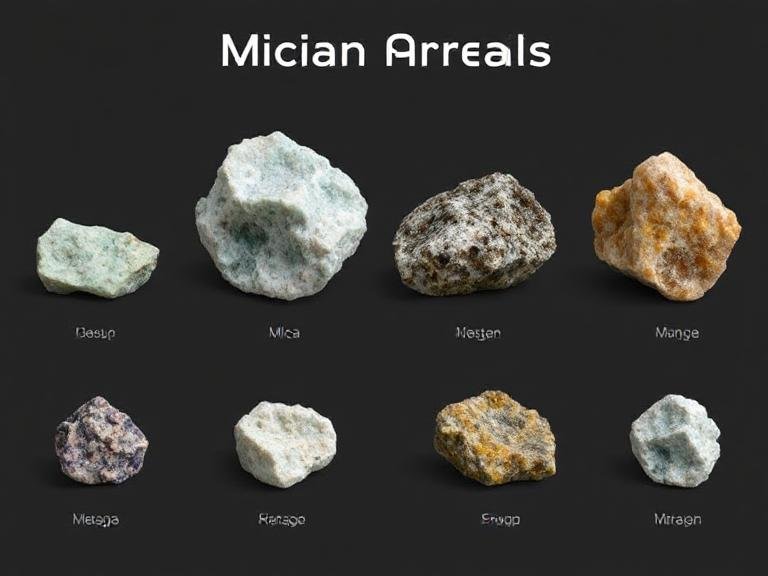


Mica Powder in Ink Pigment Formulations: The Secret Behind That Premium Shimmer
Anyone who has ever held a high-end metallic pen, a luxury ink bottle, or even a metallic business card has probably wondered what gives it that liquid-metal glow. The answer almost always comes down to one ingredient: mica powder. Not as a filler, not as an afterthought — but as the star pigment that defines the entire visual character of the ink.
Ink formulators have been grinding mica into fine powders and suspending them in vehicle systems for decades. But the science behind getting that shimmer right — color tuning, particle sizing, light refraction — is far more nuanced than most people realize. This guide digs into how mica powder actually works inside ink and pigment systems, and why it remains irreplaceable for metallic and pearlescent effects.
How Mica Powder Creates That Signature Metallic Glow in Ink
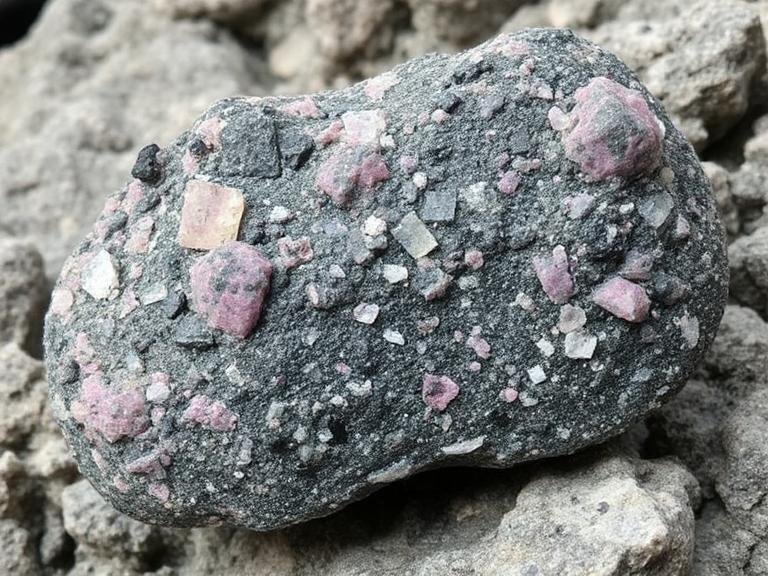
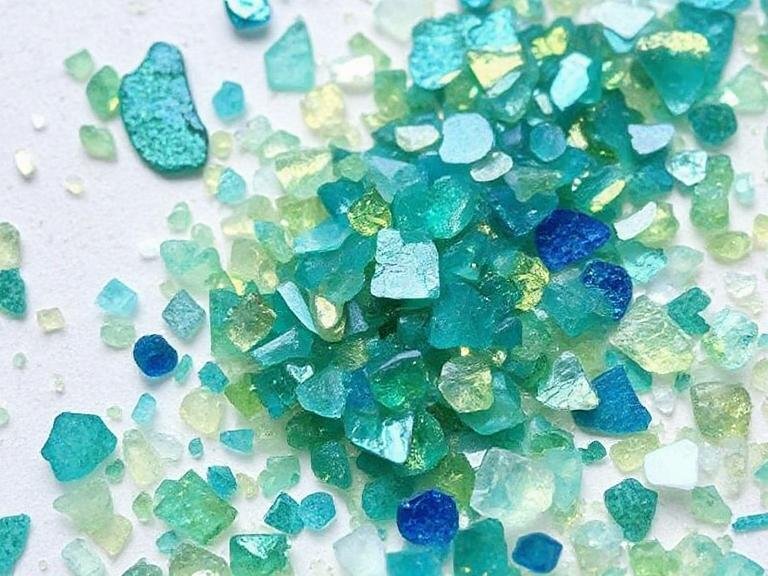
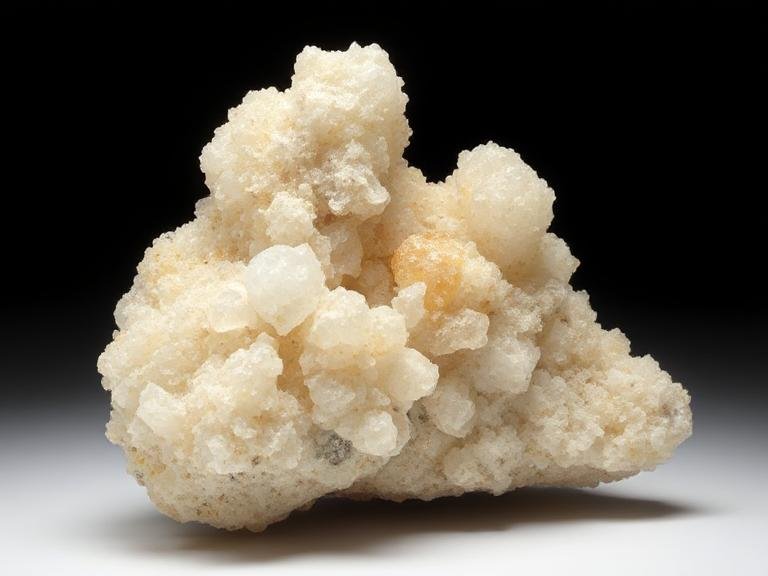
Mica belongs to the phyllosilicate group of minerals. Its crystal lattice stacks in thin, plate-like layers — think of a deck of cards compressed into a single mineral grain. When light hits these layers, it doesn’t just bounce off the surface. It penetrates the top layers, reflects off internal interfaces, and exits at a slightly different angle. That internal reflection and refraction is what produces the pearlescent luster — not a flat metallic flake effect, but something with depth and movement.
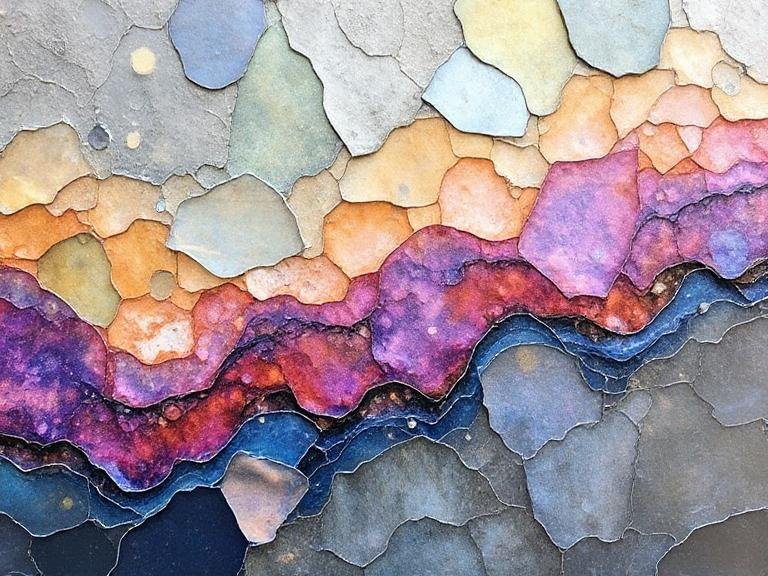
In ink systems, this matters enormously. A standard aluminum flake pigment gives you a mirror-like sparkle — bright, but one-dimensional. Mica powder gives you directional color shift. Tilt the page under a lamp and the hue moves from gold to pink to green depending on the mica type and particle thickness. That living quality is why premium fountain pen inks, automotive coatings, and security printing inks all rely on mica rather than cheaper metallic alternatives.
The refractive index of mica sits around 1.56 to 1.60, which is lower than aluminum (roughly 1.44) but the layered structure compensates by creating multiple internal reflections. The result is a softer, more diffused shimmer that reads as elegant rather than flashy — exactly what ink designers want for sophisticated stationery and packaging applications.
Color Tuning Through Particle Size and Coating Technology
The Physics of Thickness-Dependent Color
Here is where things get interesting. The color you see from mica powder in ink is not just about the mineral itself — it is heavily controlled by particle thickness. A mica platelet that is 20 micrometers thick will appear silvery-white. Thin it down to 10 micrometers and it shifts toward gold. Push it below 5 micrometers and you start seeing bronze or even copper tones. This happens because thinner layers allow shorter wavelengths of light to interfere constructively, shifting the reflected color toward the warm end of the spectrum.
Ink manufacturers exploit this by milling mica to precise thickness ranges and then blending multiple grades together. A typical metallic gold ink might combine 8-micron gold mica with 15-micron silver mica and a trace of 3-micron bronze mica. The overlapping reflections blend into a rich, warm gold that looks nothing like a single-pigment formulation.
This is why two gold inks from different suppliers can look completely different under the same light. The particle size distribution — not just the chemical composition — determines the final color. Good formulators spend weeks just dialing in the grind before they ever touch the ink vehicle.
Surface Coatings That Shift and Protect
Bare mica powder in ink is a disaster waiting to happen. The platelets absorb moisture, oxidize at edges, and chemically interact with acidic or alkaline ink vehicles. That is why virtually all mica pigments used in inks carry surface coatings — typically metal oxides like titanium dioxide, iron oxide, or chromium oxide, sometimes layered in multiple coats.
Titanium dioxide coating on mica creates that classic pearlescent white — the same effect used in car paint. Iron oxide coating pushes the color toward red-gold or bronze. Chromium oxide gives green-gold. By controlling coating thickness to within nanometers, manufacturers can produce virtually any metallic hue from a single mica base.
For ink applications specifically, the coating also serves a functional role. It prevents the mica from catalyzing degradation of the resin or solvent system. Some ink vehicles — especially water-based systems — are mildly acidic or alkaline, and uncoated mica will leach potassium and magnesium ions into the formulation, causing viscosity shifts and color drift over time. A proper oxide coating acts as a barrier, keeping the mica chemically inert inside the ink.
Dispersion Challenges and How to Get Them Right
Why Mica Sinks and Clumps in Ink
Mica powder has a plate-like morphology with a high aspect ratio — wide and thin, like tiny dinner plates. In liquid ink, these platelets want to lie flat rather than stay suspended. Gravity pulls them down, and van der Waals forces between flat surfaces make them stack into clumps. The result is a metallic ink that looks gorgeous in the bottle but separates into a dull sludge after a week on the shelf.
This is the single biggest headache in mica-based ink formulation. Aluminum flakes have the same problem but it is worse with mica because the platelets are larger and the interlayer forces are stronger.
Thixotropic Vehicles and Rheology Modifiers
The standard fix is to build thixotropy into the ink vehicle. Thixotropic inks are thick at rest but thin when sheared — so when you stir or write with the pen, the mica disperses evenly, but the moment you stop, the ink gels again and holds the particles in suspension. Fumed silica, organoclay, and hydrogenated castor oil are common thixotropic agents used in metallic inks.
The trick is balancing thixotropy with flow. Too thick and the ink skips on paper. Too thin and the mica settles. Experienced formulators target a yield stress just high enough to suspend 15–25% mica loading by weight — which is typical for premium metallic inks — while keeping the viscosity low enough for smooth pen flow or screen printing.
Wet milling with bead mills also helps break apart mica agglomerates before they enter the final formulation. Dry mica powder going straight into ink will almost always clump. Pre-dispersing the mica in a small amount of vehicle at high shear, then letting that concentrate sit for 24 hours, produces a much more stable masterbatch.
Applications Where Mica Powder Outperforms Everything Else
Security and Anti-Counterfeiting Inks
Mica-based inks show up constantly in banknote printing, passport inks, and brand authentication systems. The reason is simple: the directional color shift is extremely difficult to replicate with standard printing processes. Offset lithography, gravure, and even digital printing struggle to maintain platelet orientation during the printing process — and when orientation is random, the shimmer looks flat and lifeless.
Specialized intaglio and screen printing methods preserve platelet alignment, producing that deep, rolling metallic effect on currency. Mica powder is preferred over aluminum flake here because its softer luster reads as more premium and is harder for counterfeiters to mimic with toner-based systems.
Fountain Pen and Calligraphy Inks
The fountain pen community is obsessed with mica-based inks. Sheen and shimmer are two different things — sheen is a surface reflection from dyes, while shimmer comes from suspended particles. Mica powder delivers true shimmer that moves as you write, catching light differently on every stroke. Ink makers in this space often use uncoated or lightly coated mica at very fine particle sizes (under 10 micrometers) so the powder flows through nib feed channels without clogging.
The color possibilities are staggering. A single mica base with iron oxide coating can produce ink that reads as deep burgundy in the bottle but flashes teal-green when the page catches light at an angle. That kind of optical complexity is what keeps collectors buying bottle after bottle.
Automotive and Industrial Marking Inks
For part marking, date coding, and industrial labeling, mica powder provides weather resistance that organic pigments cannot match. Metal oxide coated mica survives UV exposure, chemical spills, and temperature cycling without fading. The platelet structure also reflects infrared radiation, which helps reduce heat buildup on dark-colored surfaces — a small but real advantage in automotive under-hood applications.
Matching Mica Grade to Ink System Chemistry
Not every mica powder works in every ink. Water-based inks demand mica with heavy oxide coating because bare silicate surfaces interact with water and cause pH drift. Solvent-based inks are more forgiving but still benefit from coated grades to prevent flocculation in low-polarity vehicles. UV-curable inks require mica that does not inhibit photoinitiators — certain iron oxide coatings can absorb UV light and slow cure, so titanium dioxide or zirconia coated mica is preferred in those systems.
Particle size distribution matters differently across systems too. Screen printing inks can handle larger platelets (10–50 micrometers) because the mesh filters out agglomerates. Fountain pen inks need sub-10 micrometer particles to avoid nib clogging. Flexographic inks sit somewhere in between.
The takeaway is that mica powder is not a commodity you drop into any formula and hope for the best. It is a precision ingredient that demands matching between mineral grade, coating type, particle size, and ink chemistry. Get those variables right and the resulting ink has a depth and luminosity that no synthetic pearlescent pigment can fully replicate — not yet, anyway.