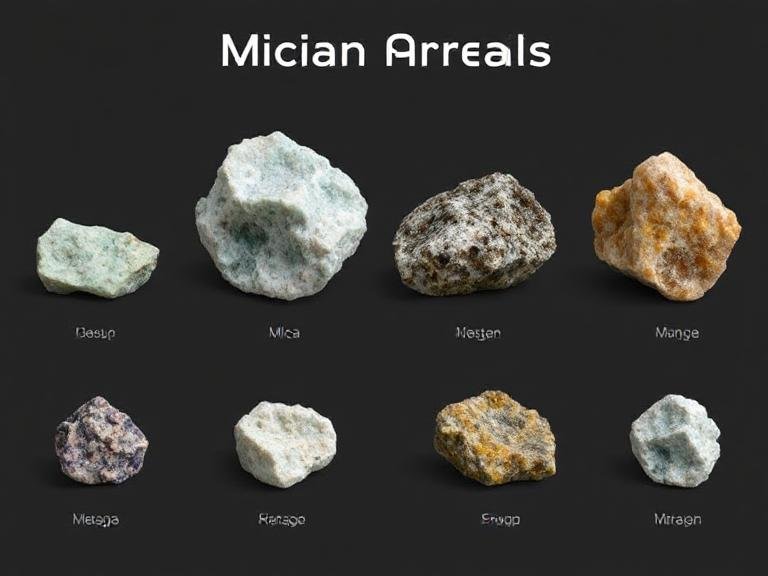


Mica Tube Installation: How to Prevent Bending and Fracture During Construction
Mica tubes are everywhere in high-voltage equipment, heating systems, and even new energy vehicle motors. Their layered crystal structure gives them incredible thermal stability and electrical insulation — but that same structure makes them brutally unforgiving when you bend them wrong. A single sharp kink during installation can trigger micro-cracks that grow under thermal cycling, eventually leading to insulation failure or complete fracture.
Getting the installation right is not optional. It is the difference between a system that runs for years and one that fails catastrophically in months.
Why Mica Tubes Crack When You Bend Them
Mica belongs to the phyllosilicate family. Its crystal layers slide easily along the basal plane, which sounds like it should make bending simple. In reality, the interlayer bonding is the weak link. When you apply force beyond the elastic limit, those layers delaminate instead of flexing uniformly. The result is a brittle fracture that starts at the outermost bend radius and propagates inward.
Humidity makes everything worse. When relative humidity climbs above 60 percent, water molecules seep between the layers and weaken the bond. Bending a damp mica tube is essentially guaranteeing a crack. On the flip side, extremely dry conditions below 30 percent RH dehydrate the material, making it stiff and prone to snap-off fracture under load.
Temperature swings compound the damage. Repeated expansion and contraction during operation generate internal stress that no amount of careful initial bending can fully compensate for. This is why installation environment matters just as much as your technique.
Control the Bending Radius Like Your Life Depends on It
The single most important rule in mica tube installation is this: never exceed the minimum bending radius. For most mica tubes, the safe bending radius sits at greater than 5mm for thin-wall variants, while thicker-walled tubes used in high-voltage applications demand a radius of at least 6 to 10 times the tube diameter. Going tighter than that is not saving time — it is creating a failure point.
Use the Right Tools for Curved Installations
Metal clamps and hard-jaw grips are the enemy. They create localized stress concentrations that act as crack initiation sites. Switch to soft-jaw clamps or non-metallic tweezers for positioning. When wrapping mica tubes around curved surfaces — like cylindrical heating elements or arc-shaped molds — use a flexible adhesive backing rather than forcing the tube into shape with mechanical pressure. The adhesive distributes contact stress evenly across the surface, keeping the tube in its natural flex zone.
For applications requiring precise curvature, such as motor assemblies in the new energy vehicle sector, the cutting precision of the tube itself matters enormously. Dimensional tolerances as tight as plus or minus 0.1mm are necessary to ensure uniform gap distribution during assembly. Even a 0.12mm deviation can cause running vibration values to spike by 25 percent, accelerating wear and risking motor burnout over time.
Avoid Forced Bending in Cold Conditions
Never bend a mica tube in a low-temperature environment. Cold makes the material brittle, and what would be a gentle curve at room temperature becomes a fracture event at 10 degrees Celsius or below. If your worksite is cold, bring the tubes to ambient temperature first and let them acclimatize for at least two hours before any forming work begins.
Installation Environment and Handling Protocols
The conditions around you during installation directly affect whether the tube survives the process. Keep ambient humidity between 40 and 60 percent RH. Use silica gel packets inside packaging and monitor with a hygrometer in real time. If you are shipping across climate zones or working during seasonal transitions, vacuum-sealed bags with nitrogen purging offer the best protection against moisture ingress.
Temperature should stay between 10 and 30 degrees Celsius, with 20 degrees being the sweet spot. Never leave mica tubes in direct sunlight or near heat sources. UV exposure degrades organic binders and accelerates embrittlement. For long-haul transport, climate-controlled vehicles or insulated containers with built-in dehumidifiers are not luxury — they are necessity.
Packaging and Transport Rules That Actually Work
Loose mica tubes in plain cardboard are an invitation for disaster. Use multi-layer moisture-barrier packaging: an inner plastic film pouch to prevent edge chipping and dust contamination, wrapped in a tear-resistant outer bag or rigid box. For tubes thinner than 0.1mm, the inner film layer is non-negotiable.
During transport, cushion everything with foam or rubber. Even minor vibrations cause invisible micro-cracks that will propagate later under thermal stress. Stack height must be limited — the bottom tubes bear the most compressive load and will deform or crack first. Never drop, never stack heavy items on top, and never allow sudden braking or impact during loading and unloading.
Welding and Joint Assembly: Where Most Bending Damage Happens
For suspended pipe-type母线 systems used in 500kV and above substations, welding is unavoidable. This is also where bending fractures most frequently occur. The key is controlling alignment before you even strike an arc.
The proven “three-pipe method” uses three 1.5-meter seamless steel tubes, equally spaced and strapped to the outside of the mica tube using straight tubes with less than 0.5mm bend deviation. This rig holds the tube perfectly straight during welding, preventing twist, deformation, and seam bulging. With this method, full-length bending deviation can be controlled well under 2.0L — a massive improvement over random clamping.
Welding support frames should be leveled with a theodolite to keep horizontal, axial, and vertical deviations under 2mm. The liner tube inserted before welding must match the inner diameter of the mica tube with spacing error under 1mm, and its centerline must align exactly with the weld joint. Any offset here translates directly into bending stress on the finished assembly.
Post-Weld Inspection Is Not Optional
After every weld, check for deformation, seam collapse, or localized bulging. Use infrared measurement tools to verify straightness along the full length. For critical high-voltage applications, ultrasonic or radiographic testing of weld interiors catches hidden defects before they become field failures.
Tension Control During Wrapping and Layering
When wrapping mica tape or tubing around a core — a common practice in motor and transformer windings — tension control is everything. Too loose and the layers shift, trapping dust and moisture between wraps. Too tight and you stretch the material beyond its elastic limit, causing permanent deformation or outright fracture.
Maintain consistent moderate tension throughout the entire wrap. Overlap each layer by 30 to 50 percent to eliminate gaps where air and moisture can penetrate. The number of layers follows design specifications — more layers mean higher insulation rating but also larger overall dimensions and reduced heat dissipation. Do not blindly stack layers to compensate for poor initial wrapping.
Secure the tail end with high-temperature resistant tape or specialized adhesive. A loose end will vibrate, lift, and eventually peel away during operation. For critical installations, a secondary tightening pass adds mechanical strength and reliability.
Edge Treatment and Final Quality Checks
Rough edges are fracture waiting to happen. After any cutting operation — laser, rotary blade, or die-punching — deburr and polish the edges. A light pass with fine-grit sandpaper removes burrs and sharp corners that act as stress risers. Laser cutting produces the cleanest edges with minimal mechanical stress, but only if power and focal length are precisely calibrated. Misaligned parameters cause localized overheating, charring, and micro-fractures that are nearly impossible to see but devastating in performance.
Before putting the system into service, run insulation resistance tests and withstand voltage tests. For ongoing maintenance, inspect regularly for cracking, bulging, or delamination. Infrared thermography can detect abnormal surface temperature distribution early, flagging potential hotspots before they become failures.
The bottom line is this: mica tubes do not fail because they are weak. They fail because someone bent them too fast, stored them too wet, or welded them without proper alignment. Respect the material, control the environment, and follow these protocols — and your installations will hold up under the harshest conditions.