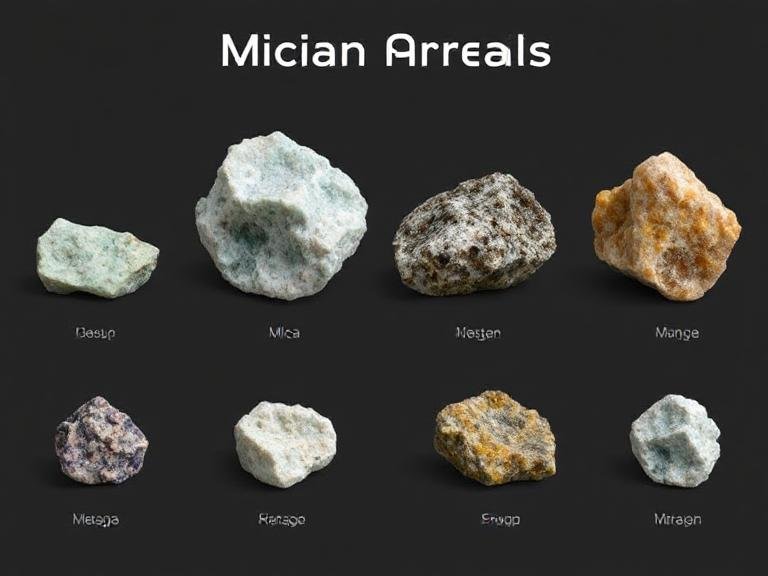


Gentle Handling Procedures for Mica Ore Transportation and Loading/Unloading
Mica ore, valued for its thermal stability and electrical insulation properties, requires meticulous handling during transportation and loading/unloading to prevent degradation. Physical impacts such as collisions, drops, or vibrations can cause surface cracking, discoloration, and reduced mechanical strength, leading to quality issues and economic losses. Implementing standardized gentle handling procedures is essential to maintain material integrity throughout the supply chain.
Core Principles of Gentle Handling
Minimizing Physical Impact
The primary goal of gentle handling is to reduce kinetic energy transfer during operations. When loading mica ore into containers or vehicles, workers must avoid throwing, sliding, or rolling packages. For example, when transferring bags of mica powder from storage to transport vehicles, personnel should lift each bag with both hands and place it gently onto the loading platform rather than dropping it. Similarly, during unloading, bags should be removed one by one and lowered carefully to prevent abrupt impacts with the ground or other surfaces.
In bulk mica ore transportation, the use of conveyor belts with adjustable speeds is recommended. Conveyor systems should operate at a consistent, moderate pace to prevent ore from tumbling or colliding with equipment components. For instance, in a mica mining operation in Rajasthan, India, the implementation of a variable-speed conveyor belt reduced ore breakage rates by 30% compared to traditional high-speed systems.
Ensuring Stability During Transit
Proper securing of mica ore loads is crucial to prevent shifting during transportation, which can lead to internal collisions and surface damage. When loading mica ore into trucks or shipping containers, the cargo should be distributed evenly to maintain a low center of gravity. Heavy packages should be placed at the bottom, with lighter ones on top, and gaps between packages should be filled with dunnage materials such as wooden blocks or air cushions to minimize movement.
For bulk mica ore shipments, the use of specialized loading chutes with adjustable angles can help control the flow of ore into the cargo hold, reducing the risk of impact damage. In maritime transportation, the application of anti-slip coatings on the deck or cargo hold surfaces can enhance friction and prevent ore from sliding during rough sea conditions. A study conducted by the Indian Bureau of Mines found that anti-slip coatings reduced ore displacement by 45% in bulk carrier ships transporting mica ore from Gujarat to international ports.
Loading and Unloading Techniques for Different Packaging Types
Bagged Mica Ore
When handling bagged mica ore, workers should inspect each bag for tears or weak seams before loading. Damaged bags should be repaired or replaced immediately to prevent spillage. During loading, bags should be stacked in a stable, interlocking pattern, similar to bricklaying, to maximize stability. The maximum stacking height should not exceed the recommended limit based on the bag’s strength and the load-bearing capacity of the loading platform.
For unloading bagged mica ore, forklifts or pallet jacks should be used to lift entire pallets at once, rather than removing individual bags. If manual unloading is necessary, workers should use proper lifting techniques, bending at the knees and keeping the back straight, to avoid strain injuries. In a mica processing plant in Brazil, the introduction of automated bag-handling systems reduced manual lifting operations by 70%, significantly improving worker safety and reducing ore damage rates.
Bulk Mica Ore
Loading bulk mica ore requires specialized equipment such as front-end loaders or excavators. Operators should use smooth, controlled movements when scooping and transferring ore to prevent excessive agitation. The bucket of the loading equipment should be lowered gently onto the ore pile to minimize impact, and the ore should be released slowly into the transport vehicle or storage bin.
During unloading of bulk mica ore, gravity-based systems such as hoppers or chutes are preferred over mechanical dumping methods. Hoppers should be designed with gentle slopes to allow ore to flow smoothly without excessive tumbling. In a mica mining operation in Canada, the installation of a vibrating hopper system reduced ore degradation during unloading by 25% compared to traditional static hoppers.
Environmental Considerations During Handling
Temperature and Humidity Control
Mica ore is sensitive to extreme temperatures and high humidity, which can accelerate degradation processes such as oxidation and hydrolysis. During transportation and storage, the environmental conditions should be monitored and controlled to maintain optimal parameters. For example, in hot climates, transport vehicles should be equipped with ventilation systems or refrigeration units to prevent excessive heating of the ore.
In humid environments, the use of desiccants or moisture-absorbing materials inside packaging or storage containers can help reduce moisture levels. A mica supplier in Thailand reported a 20% reduction in ore clumping and degradation by incorporating silica gel desiccants into their bagged mica ore packaging. Additionally, storage facilities should be equipped with dehumidifiers and proper drainage systems to prevent water accumulation and humidity buildup.
Dust Suppression
The handling of mica ore, especially in powdered form, can generate significant amounts of dust, which poses health risks to workers and environmental concerns. To minimize dust emissions, water spraying systems or dust suppression agents can be applied during loading and unloading operations. In a mica processing plant in South Africa, the installation of a high-pressure water spraying system at the loading dock reduced airborne dust levels by 60%, improving air quality and worker safety.
Furthermore, enclosed or semi-enclosed handling systems, such as covered conveyor belts or dust-tight storage silos, can effectively contain dust and prevent its dispersion into the surrounding environment. Regular maintenance and cleaning of handling equipment and storage areas are also essential to prevent dust accumulation and potential fire hazards.
By adhering to these gentle handling procedures, mica ore producers, transporters, and end-users can ensure the preservation of material quality throughout the supply chain, reducing waste, improving product performance, and enhancing overall operational efficiency.