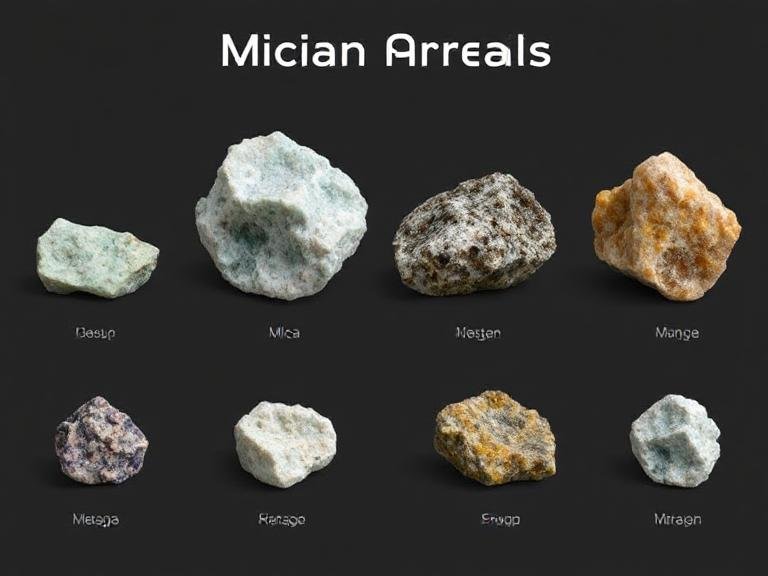


Best Practices for Storing Mica Powder to Prevent Cross-Contamination and Ensure Isolation
Proper storage of mica powder is critical for maintaining its purity, preventing cross-contamination, and ensuring consistent performance in industrial applications. This guide outlines practical strategies for isolating mica powder during storage while addressing common contamination risks.
Understanding Contamination Risks in Mica Storage
Common Sources of Cross-Contamination
Mica powder’s fine particle size (typically 1–200 μm) makes it susceptible to contamination from environmental factors and handling procedures. Key sources include:
- Airborne particles: Dust from other materials in storage facilities
- Moisture ingress: Humidity causing clumping or chemical reactions
- Physical transfer: Residues from containers or handling equipment
- Chemical interactions: Volatile organic compounds (VOCs) from adjacent materials
Even trace amounts of contaminants can alter mica’s electrical, thermal, or optical properties, rendering it unsuitable for precision applications like electronics or cosmetics.
Impact of Improper Storage on Material Quality
Contaminated mica powder may exhibit:
- Reduced dielectric strength in electrical insulation
- Discolored appearance in cosmetic formulations
- Compromised thermal stability in industrial coatings
- Inconsistent particle size distribution affecting flow properties
These issues often require costly reprocessing or material replacement, emphasizing the need for rigorous storage protocols.
Creating Dedicated Storage Zones for Mica Powder
Physical Isolation Strategies
Designate separate storage areas exclusively for mica powder,远离 (away from) materials with conflicting properties:
- Chemically reactive substances: Avoid storing near acids, bases, or oxidizing agents
- High-dust materials: Keep distance from powders like talc or silica that generate airborne particles
- Volatile compounds: Isolate from solvents, adhesives, or other VOC sources
Use physical barriers like partitions or curtains to create micro-environments within warehouses. For facilities handling multiple grades of mica, implement color-coded zones to prevent accidental mixing.
Environmental Control Measures
Maintain optimal storage conditions through:
- Temperature regulation: Keep between 15–25°C to prevent thermal degradation
- Humidity control: Maintain relative humidity below 40% using dehumidifiers
- Air filtration: Install HEPA filters with 99.97% efficiency for particles ≥0.3 μm
- Light protection: Use opaque containers or UV-blocking curtains to prevent photodegradation
Monitor conditions continuously with digital sensors and set up alerts for deviations beyond acceptable ranges.
Container Selection and Handling Procedures
Appropriate Packaging Materials
Choose containers that minimize contamination risks:
- Material compatibility: Use high-density polyethylene (HDPE) or stainless steel for chemical resistance
- Seal integrity: Opt for containers with airtight gaskets and tamper-evident closures
- Static dissipation: Select antistatic containers to prevent dust clinging to surfaces
- Transparency: Consider clear containers for visual inspection (when compatible with light sensitivity)
For long-term storage, double-bag mica powder in food-grade polyethylene liners before placing in outer containers.
Handling Best Practices to Maintain Isolation
Implement strict protocols during material transfer:
- Dedicated equipment: Use separate scoops, spatulas, and conveyors for each mica grade
- Cleaning procedures: Wipe down tools with lint-free cloths moistened with isopropyl alcohol between uses
- Personal protective equipment (PPE): Require gloves, masks, and hairnets to prevent human contamination
- Containment systems: Use glove boxes or laminar flow hoods when working with ultra-fine grades (<10 μm)
Train personnel in contamination prevention techniques, emphasizing the importance of avoiding shortcuts that compromise isolation.
Advanced Contamination Prevention Techniques
Positive Pressure Storage Systems
For high-purity applications, consider pressurized storage rooms maintained at 5–10 Pa above atmospheric pressure. This prevents infiltration of contaminated air from adjacent areas. Equip such systems with:
- HEPA-filtered air supply
- Pressure monitors with automatic alarms
- Self-closing doors with airlocks
Nitrogen Blanketing for Sensitive Grades
Protect reactive mica formulations by purging containers with nitrogen gas. This creates an inert atmosphere that:
- Prevents oxidation reactions
- Displaces moisture-laden air
- Reduces bacterial growth in organic-containing grades
Use nitrogen with <1 ppm oxygen and moisture content for maximum effectiveness.
Regular Contamination Audits
Establish a schedule for:
- Visual inspections: Check for discoloration, clumping, or foreign particles
- Particle size analysis: Verify distribution hasn’t shifted due to contamination
- Chemical purity tests: Use XRF or ICP-MS to detect trace impurities
- Microbial testing: For grades used in pharmaceutical or food applications
Document all findings and implement corrective actions immediately when deviations occur.
Special Considerations for Different Mica Grades
Handling Micronized Mica Powders (<10 μm)
Extra precautions for fine grades include:
- Using enclosed transfer systems to prevent airborne dispersion
- Implementing electrostatic precipitation in ventilation systems
- Storing in vacuum-sealed bags to prevent moisture absorption
- Wearing Type N95 respirators during handling
Storing Wet-Processed Mica
For grades produced through water-based methods:
- Ensure complete drying before storage to prevent mold growth
- Use desiccant packs in containers to absorb residual moisture
- Avoid cardboard packaging that may introduce cellulose fibers
- Store at lower temperatures (10–15°C) to inhibit microbial activity
Managing Colored Mica Variants
Prevent color contamination by:
- Storing pigments separately by hue family (reds, blues, etc.)
- Using opaque containers to prevent light-induced fading
- Avoiding storage near strong oxidizing agents that may alter colors
- Implementing FIFO (first-in, first-out) rotation to prevent prolonged storage
By implementing these comprehensive strategies, manufacturers can maintain mica powder purity throughout storage, ensuring reliable performance in demanding applications while minimizing waste and rework costs associated with contamination issues.