
Optimal Filling Ratios for Mica Flake in Papermaking Applications
The integration of mica flakes into papermaking processes enhances material performance through improved insulation, thermal stability, and mechanical strength. This guide explores scientific approaches to determining optimal filling ratios for mica flakes across different paper grades, focusing on particle size distribution, surface modification techniques, and application-specific requirements.
Understanding Mica Flake Properties
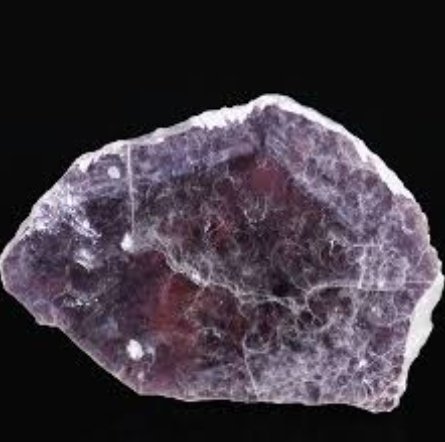
Mica flakes, derived from natural or synthetic sources, exhibit unique platelet structures with high aspect ratios. These properties contribute to enhanced barrier effects and dimensional stability when incorporated into paper matrices.
Particle Size Considerations
Research indicates that mica flakes with median particle sizes between 5–50 μm demonstrate superior reinforcement effects without compromising paper formation. Smaller particles (1–10 μm) improve opacity and surface smoothness, while larger fractions (50–100 μm) enhance thermal conductivity and electrical insulation.
For electrical insulation papers, a bimodal distribution combining 30% coarse flakes (50–100 μm) and 70% fine particles (5–20 μm) achieves optimal dielectric strength and breakdown voltage. This combination balances interlayer spacing with surface coverage to minimize electrical leakage paths.
Surface Modification Techniques
Chemical treatments significantly influence mica-fiber adhesion. Studies show that 4% sulfuric acid treatment at 90°C for 40 minutes increases surface roughness, improving compatibility with cellulose fibers. Subsequent cationic starch modification (10 kg/t) enhances electrostatic attraction between mica platelets and paper fibers, reducing filler retention losses during wet pressing.
For synthetic fiber-reinforced papers, silane coupling agents (30 kg/t) create covalent bonds between mica surfaces and aramid fibers. This modification increases composite tensile strength by 22–35% compared to untreated mica, as demonstrated in high-temperature insulation applications.
Application-Specific Filling Ratios
Different paper grades require tailored mica flake concentrations based on performance demands and processing constraints.
Electrical Insulation Papers
Capacitor-grade papers utilize 15–25% mica flakes by dry weight to achieve dielectric constants exceeding 7.0 while maintaining breakdown voltages above 50 kV/mm. The addition of 5% synthetic mica further reduces dielectric loss tangents to 0.001–0.003 at 50 Hz, meeting stringent power transmission requirements.
For motor insulation systems, 8–12% mica flake loading in aramid-based papers provides thermal stability up to 220°C without compromising flexibility. This ratio balances thermal conductivity (0.3–0.5 W/m·K) with mechanical elongation (>3%) during winding processes.
Thermal Management Papers
Building insulation materials incorporate 30–40% mica flakes to achieve thermal conductivities below 0.04 W/m·K. The platelet orientation induced during paper formation creates tortuous paths for heat transfer, reducing energy loss in HVAC systems.
In automotive gasket papers, 20–25% mica flake content improves compression set resistance while maintaining sealing efficiency at -40°C to 150°C. The combination of mica’s low coefficient of thermal expansion (CTE ≈ 5 ppm/°C) with cellulose fibers minimizes dimensional changes during temperature cycling.
High-Strength Composite Papers
Aerospace applications utilize 50–60% mica flake reinforcement in carbon fiber-reinforced papers to achieve tensile strengths exceeding 500 MPa. The layered structure of mica platelets effectively arrests crack propagation, increasing impact resistance by 40% compared to unfilled composites.
For structural sandwich cores, 45% mica flake loading in phenolic resin matrices produces flexural moduli of 8–12 GPa while reducing density by 30% versus solid laminates. This lightweighting approach enables fuel efficiency improvements in marine and aviation structures.
Process Optimization Strategies
Achieving target filling ratios requires careful control of papermaking parameters to prevent fiber flocculation and filler agglomeration.
Dispersion Techniques
High-shear mixing at 2000 rpm with polyethylene oxide dispersants (1.5 kg/t) ensures uniform mica distribution in pulp slurries. Ultrasonic treatment (600 W, 5 minutes) further breaks down agglomerates, producing consistent filler dispersion even at high concentrations.
Headbox Design Modifications
Adapted headbox geometries with 0.3–0.7% consistency control enable precise mica flake alignment during paper formation. Slot die configurations with adjustable flow rates optimize platelet orientation for specific property requirements, such as maximizing thermal conductivity in the machine direction.
Drying Process Control
Infrared drying systems operating at 120–150°C accelerate moisture removal while preventing mica delamination. Controlled airflow velocities (2–3 m/s) maintain filler-fiber adhesion during the critical drying phase, reducing dust generation and improving final product consistency.
By aligning mica flake properties with application-specific demands and optimizing processing parameters, manufacturers can achieve significant performance enhancements in papermaking applications. The scientific approaches outlined here provide a framework for developing customized mica-filled papers that meet evolving industry requirements for sustainability, efficiency, and functionality.